
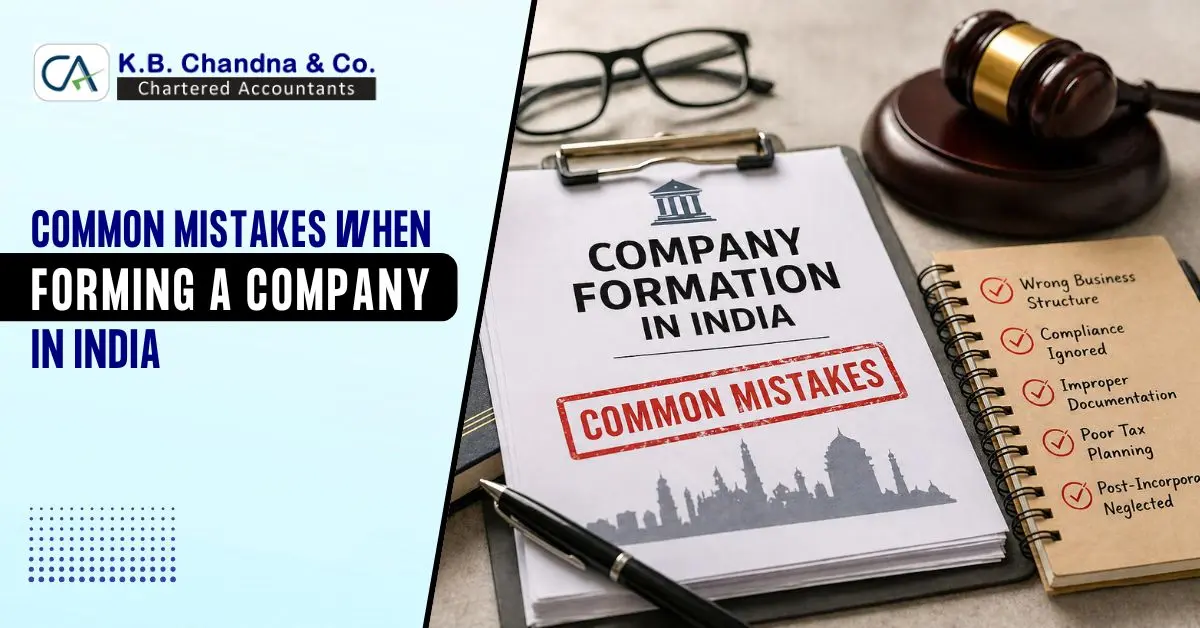
Common Mistakes When Forming a Company in India
Starting a business in India is an exciting opportunity, whether you are a startup founder, entrepreneur, or foreign investor. However, company formation is not just about registration—it involves legal structuring, tax planning, and regulatory compliance.
Many businesses make critical mistakes during the incorporation process that lead to delays, penalties, compliance issues, or financial losses.
In this guide, we highlight the most common mistakes when forming a company in India and how you can avoid them.
Why Proper Company Formation Matters
Choosing the right structure and completing compliance correctly ensures:
- Smooth business operations
- Legal protection
- Tax efficiency
- Investor confidence
- Avoidance of penalties
Incorrect decisions at the beginning can create long-term problems.
1. Choosing the Wrong Business Structure
One of the most common mistakes is selecting an unsuitable business structure.
Options in India include:
- Private Limited Company
- Limited Liability Partnership (LLP)
- Sole Proprietorship
- One Person Company (OPC)
- Partnership Firm
Each structure has different implications for:
- taxation
- compliance
- funding
- liability
Example mistake:
A startup choosing LLP when investors prefer a Private Limited Company.
2. Ignoring Compliance Requirements
Many entrepreneurs believe compliance starts after incorporation. That’s incorrect.
Even immediately after registration, businesses must comply with:
- PAN & TAN registration
- GST registration (if applicable)
- bank account setup
- statutory filings
Missing these can lead to penalties.
3. Improper Documentation
Incomplete or incorrect documentation can delay company registration.
Common issues include:
- incorrect address proof
- mismatch in identity documents
- errors in incorporation forms
- missing digital signatures
For foreign directors, documents must often be notarized and apostilled.
4. Poor Tax Planning
Tax planning should begin before incorporation.
Mistakes include:
- not considering GST applicability
- ignoring TDS obligations
- improper capital structuring
- overlooking tax-efficient structure
This can increase tax burden unnecessarily.
5. Selecting the Wrong Company Name
Many applications get rejected due to:
- similar existing names
- trademark conflicts
- non-compliance with MCA guidelines
Choosing a unique and compliant name is critical.
6. Not Drafting Proper MOA and AOA
Memorandum of Association (MOA) and Articles of Association (AOA) define your company’s:
- objectives
- rules
- internal governance
Poor drafting can limit business activities and create legal complications later.
7. Ignoring Post-Incorporation Compliance
After incorporation, companies must comply with:
- annual filings
- board meetings
- statutory registers
- auditor appointment
- ROC compliance
Many startups ignore these requirements and face penalties later.
8. Not Taking Professional Guidance
Trying to handle company formation without expert help often leads to:
- errors in filing
- compliance gaps
- delays in approvals
- incorrect structure selection
Professional guidance ensures smooth and compliant incorporation.
9. Underestimating Cost and Time
Entrepreneurs often underestimate:
- government fees
- professional charges
- compliance costs
- timelines
Realistic planning avoids unnecessary stress.
10. Ignoring Future Scalability
Choosing a structure without considering future growth can limit:
- fundraising
- expansion
- foreign investment
- ownership restructuring
Always plan with long-term goals in mind.
How to Avoid These Mistakes
To ensure smooth company formation:
✔ Choose the right business structure
✔ Prepare accurate documentation
✔ Plan taxation in advance
✔ Follow compliance requirements
✔ Take professional guidance
✔ Think long-term
Why Choose K.B. Chandna & Co.
At K.B. Chandna & Co., we help businesses avoid these common mistakes by offering:
- company incorporation services
- tax planning
- regulatory compliance
- advisory for foreign companies
- ongoing compliance support
With 65+ years of experience, we ensure a smooth and legally compliant business setup process in India.
Final Thoughts
Company formation in India is a critical step that sets the foundation for your business success.
Avoiding common mistakes can save time, money, and legal complications.
With the right planning and professional support, you can start your business journey with confidence.
FAQs
1. What is the best structure for a startup in India?
A Private Limited Company is generally preferred due to scalability and investor acceptance.
2. How long does company registration take?
Typically 7–15 working days, depending on documentation and approvals.
3. Is professional help necessary for company formation?
Yes, it ensures compliance, correct structure selection, and avoids costly mistakes.