
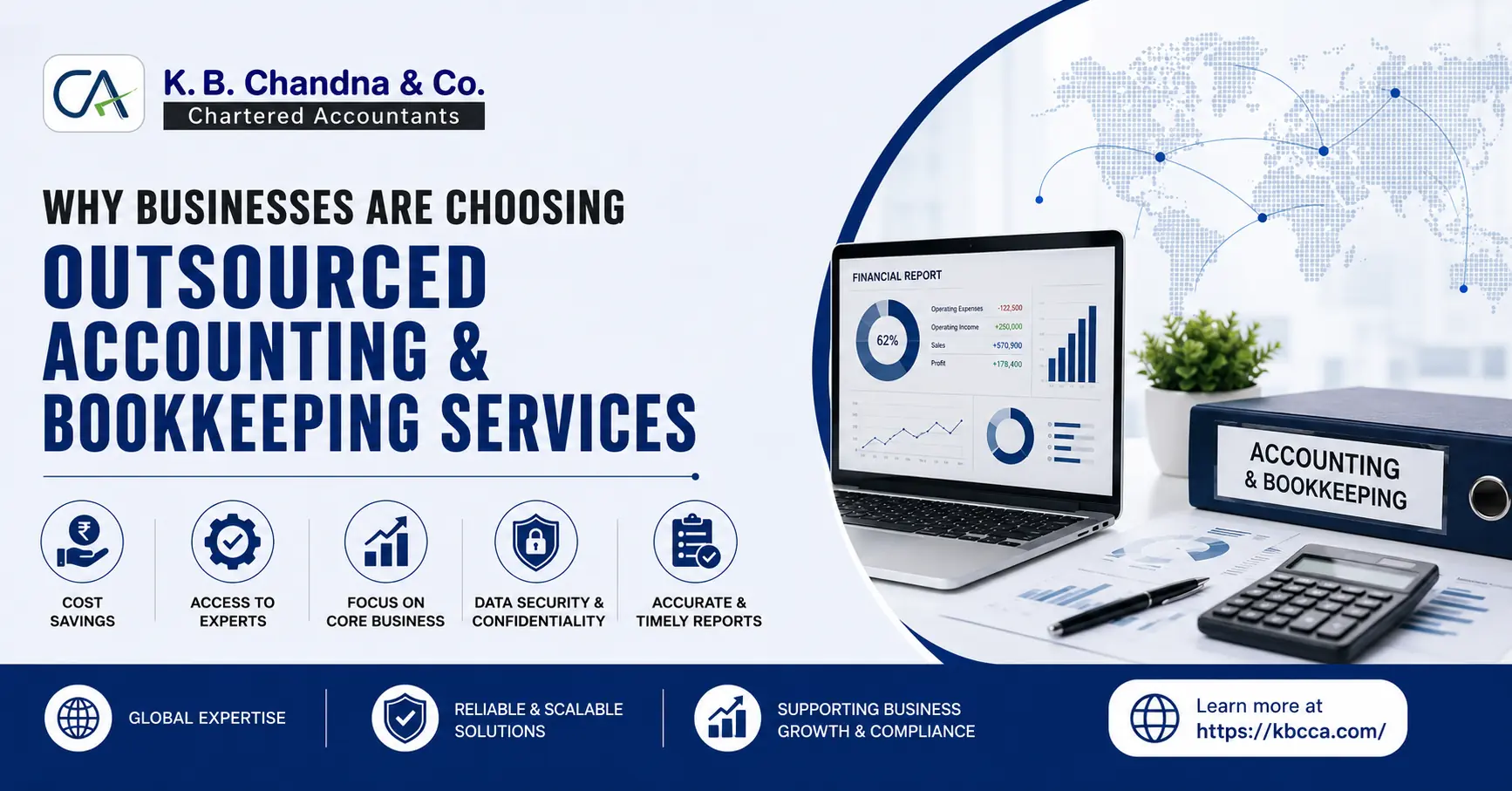
Why Businesses Are Choosing Outsourced Accounting & Bookkeeping Services
Managing finances accurately is one of the most important responsibilities for any business. From recording daily transactions and reconciling bank accounts to preparing financial reports and maintaining compliance, accounting requires time, expertise, and consistent attention.
However, maintaining an in-house accounting team can be expensive and resource-intensive. This is why an increasing number of businesses are choosing outsourced accounting and bookkeeping services to manage their financial operations more efficiently.
What Are Outsourced Accounting & Bookkeeping Services?
Outsourced accounting involves hiring an external accounting firm or professional service provider to handle some or all of a company’s accounting functions.
Bookkeeping may include:
- Recording financial transactions
- Maintaining ledgers
- Bank reconciliation
- Accounts payable and receivable
- Expense tracking
- Payroll-related accounting
- Financial reporting
- Maintaining accounting records
Depending on their requirements, businesses can outsource specific accounting tasks or their complete finance and bookkeeping function.
Why Are Businesses Outsourcing Accounting?
1. Reduce Accounting Costs
Maintaining an in-house accounting department involves salaries, recruitment, training, software, infrastructure, and employee benefits.
Outsourcing allows businesses to access professional accounting support without the cost of maintaining a large internal team.
For startups and small and medium-sized businesses, this can make financial management more cost-effective.
2. Access Professional Accounting Expertise
Accounting rules, tax regulations, GST requirements, and financial reporting standards can be complex.
By working with experienced accounting professionals, businesses can access specialized knowledge and reduce the risk of accounting mistakes.
An outsourced accounting provider can also help businesses maintain accurate records and identify potential financial issues.
3. Save Time
Bookkeeping can consume considerable time for business owners and management teams.
When routine accounting responsibilities are outsourced, business owners can spend more time focusing on:
- Business development
- Customer relationships
- Sales and marketing
- Operations
- Strategic planning
Instead of spending hours managing financial records, management can concentrate on growing the business.
4. Improve Bookkeeping Accuracy
Accurate bookkeeping is essential for understanding the financial position of a business.
Professional accounting teams follow established processes for recording transactions, reconciling accounts, and preparing reports. This can help reduce errors caused by incomplete records, incorrect entries, or missed transactions.
5. Get Better Financial Insights
Outsourced accounting is not limited to recording transactions.
A professional accounting team can prepare useful financial reports that help management understand:
- Revenue and expenses
- Profitability
- Cash flow
- Outstanding receivables
- Payables
- Financial trends
These insights can support better business decision-making.
Outsourcing vs. In-House Accounting
Businesses often compare the cost and benefits of maintaining an internal accounting department with outsourcing.
| In-House Accounting | Outsourced Accounting |
| Requires dedicated employees | Access to an external professional team |
| Higher employee-related costs | Flexible service costs |
| Recruitment and training required | No need to build a complete team |
| Business manages accounting processes internally | Accounting provider manages agreed functions |
| Scaling the team may take time | Services can often scale with business needs |
The right approach depends on the company’s size, complexity, budget, and accounting requirements.
Who Can Benefit From Outsourced Bookkeeping Services?
Startups
Startups often need reliable financial records but may not have the resources to hire a complete accounting team.
Outsourcing provides access to accounting support while allowing founders to focus on building the business.
Small and Medium-Sized Businesses
Growing businesses may find that their accounting requirements increase faster than their internal resources.
Outsourcing can provide additional accounting capacity without immediately expanding the internal team.
Foreign Companies Operating in India
Foreign businesses operating in India may need support with local accounting, taxation, GST, payroll accounting, and financial compliance.
An experienced Indian accounting service provider can help international businesses manage their local finance functions.
Growing Businesses
As a business expands, accounting becomes more complex. Outsourced accounting services can help companies manage increasing transaction volumes and reporting requirements.
What Accounting Functions Can Be Outsourced?
Businesses can outsource a wide range of accounting activities, including:
Bookkeeping
Maintaining day-to-day financial records and recording business transactions.
Accounts Payable
Managing supplier invoices, payments, and outstanding liabilities.
Accounts Receivable
Tracking customer invoices, collections, and outstanding receivables.
Bank Reconciliation
Matching accounting records with bank statements to identify discrepancies and ensure accurate balances.
Financial Reporting
Preparing regular financial statements and management reports.
Payroll Accounting
Supporting payroll-related accounting records and reconciliations.
GST Accounting Support
Maintaining records and providing accounting information required for GST compliance.
How Outsourced Accounting Supports Business Growth
A reliable accounting system provides more than compliance—it gives business owners greater visibility into their finances.
With accurate and timely financial information, businesses can better understand where money is being spent, identify profitable activities, monitor cash flow, and plan future investments.
This makes accounting outsourcing a strategic option rather than simply a way to reduce administrative work.
How to Choose an Accounting Outsourcing Company in India
Before selecting an accounting service provider, businesses should consider:
Experience
Look for a provider with experience working with businesses similar to yours.
Service Scope
Determine whether the provider offers the accounting services you require, from bookkeeping to financial reporting and tax support.
Data Security
Financial records are sensitive. Ask about data protection, access controls, confidentiality, and secure document management.
Technology
A reliable provider should be comfortable working with modern accounting software and digital workflows.
Scalability
Choose a service provider capable of supporting your business as its accounting requirements grow.
Professional Expertise
Working with a qualified accounting and advisory firm can provide access to professionals who understand accounting, taxation, compliance, and financial reporting.
Benefits of Outsourced Accounting & Bookkeeping at a Glance
Businesses choose outsourcing because it can provide:
- Lower accounting overheads
- Access to professional expertise
- Accurate financial records
- Time savings
- Scalable accounting support
- Better financial reporting
- Improved visibility into cash flow
- Support for regulatory compliance
Conclusion
Outsourced accounting and bookkeeping services are becoming an increasingly practical option for businesses that want professional financial management without the expense and complexity of maintaining a large in-house accounting department.
From routine bookkeeping and bank reconciliation to financial reporting and accounting support for businesses operating in India, outsourcing can help organizations improve efficiency while allowing management to focus on growth.
For businesses looking for reliable accounting outsourcing companies in India, choosing an experienced and professional accounting firm can provide the expertise and ongoing support needed to maintain accurate financial records and build a stronger financial foundation.